

Table of Contents
- How to Wash Performance Leggings Properly: The Complete Routine
- Step 1: How to Wash Leggings in a Washing Machine Without Damaging Them
- Detergent, Dosage, and Why Fabric Softener Ruins Activewear
- Can You Put Leggings in the Dryer? What Air Drying Protects
- How to Remove Odor from Workout Clothes (That Smell After Washing)
- How Often to Wash Workout Clothes (and What Happens If You Don't)
- Stain Pretreatment, Pilling, and Other Fixes for Leggings That Look Worn
- Frequently Asked Questions
Last Updated: October 6, 2026
How to Wash Performance Leggings Properly: The Complete Routine
Learning how to wash performance leggings properly comes down to three things: cold water, a gentle cycle, and air drying.
Most people treat activewear like everyday cotton, hot water, regular detergent, a hot dryer, then wonder why it pills, fades, and sags.
At Shop What If, we sell studio-quality leggings built for yoga, Pilates, and daily wear. So we hear about this a lot.

Below: the full wash-to-dry routine, plus fixes for odor, stains, and pilling.
What You'll Need Before You Start
Gather these first:
- A mesh laundry bag (one per two or three pairs)
- Mild detergent, ideally free-and-clear
- A drying rack or clean shower rod
Skip fabric softener and dryer sheets entirely, more on why below.
Check the care label first: most performance leggings are a polyester and spandex blend, and that blend drives every decision below.
Step 1: How to Wash Leggings in a Washing Machine Without Damaging Them
You can machine wash most performance leggings safely. Control three variables: water temperature, cycle type, and load size.
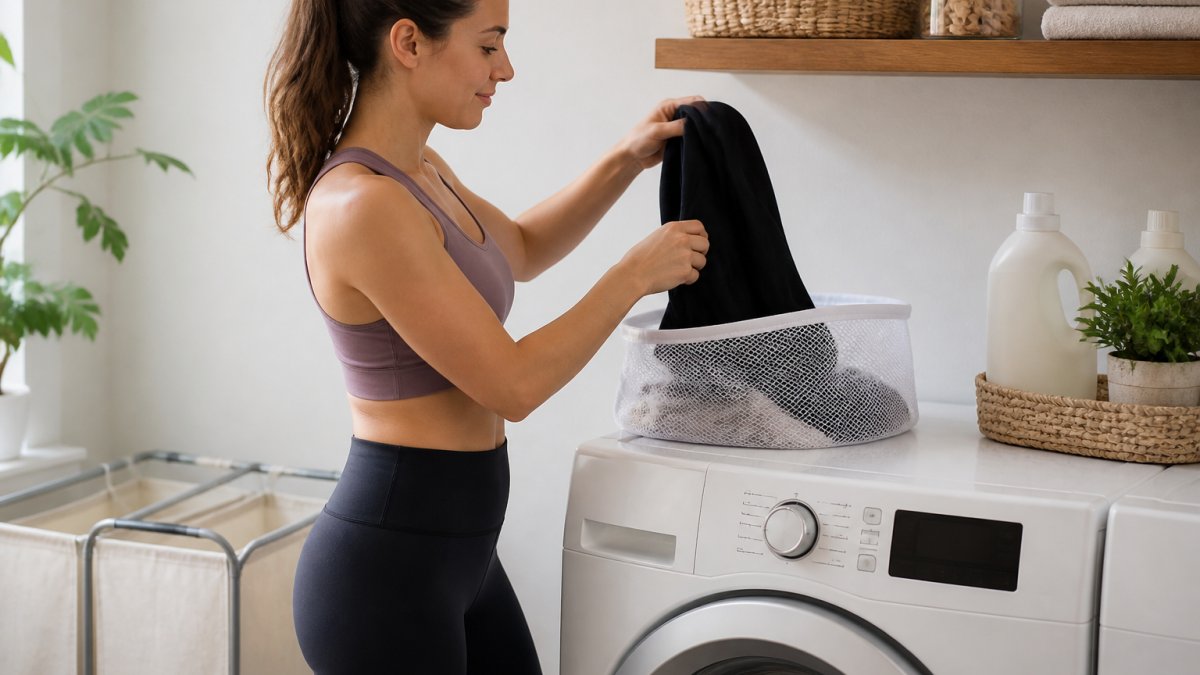
Cold Water, Gentle Cycle, and the Right Load Size
Set the machine to cold water. Always. Heat makes stretch fibers relax and lose their snap, and once elastane loses its elasticity, it doesn't come back. Cold water also protects dye, so black leggings stay black.
Next, pick the gentle or delicate cycle, slower agitation and shorter spin times mean less surface friction, which causes pilling. Then think about load size: overloading makes garments rub against each other all cycle, wearing down fabric fast.
A few more settings to check:
- Spin speed: medium or low, not high
- Extra rinse: optional, but helpful if you sweat heavily
- Water level: enough for garments to move freely
Turn Garments Inside Out and Use a Mesh Laundry Bag
Turning leggings inside out protects the outer surface, the side people see, from friction.
A mesh laundry bag adds a second layer of protection, keeping leggings from snagging on zippers, hooks, or bra clasps. If your leggings have silicone details or grippy waistbands, the bag matters even more, since silicone picks up lint and grabs onto other fabrics.
Detergent, Dosage, and Why Fabric Softener Ruins Activewear
Mild detergent in the right amount is all performance leggings need. Too much leaves residue that traps odor, and fabric softener is worse: its waxy film blocks moisture wicking, so leggings hold sweat against your skin.
So what should you use?
- Liquid detergent over powder, since powder can leave specks on synthetics
- Free-and-clear formulas if you have sensitive skin
- Sport-specific detergent if odor is a recurring issue
Dosage trips people up. More soap does not mean cleaner clothes. For a small load of leggings, use less than the cap suggests. Residue is harder to remove than sweat.
Also skip chlorine bleach. It weakens stretch fibers and can yellow white fabric over time.
Can You Put Leggings in the Dryer? What Air Drying Protects
You can put leggings in the dryer, but you shouldn't. High heat destroys stretch fibers, causes shrinkage, and fades color, while air drying protects elasticity, fit, and dye at no cost. Spandex and elastane are segmented polyurethane fibers, and heat above roughly 140°F relaxes the polymer chains that give the fiber its snap. Once those chains relax and re-set, the leggings don't bounce back, they sag at the knees, bag at the seat, and lose compression.
Air-Drying by Fabric Type
Match the drying method to the blend on the care label:
- Polyester/spandex blends (the most common): Lay flat on a rack or hang over a shower rod. These dry in 2-4 hours indoors and are the most forgiving.
- Nylon/spandex blends: Similar, but nylon holds water slightly longer. Expect 3-5 hours. Lay flat to avoid stretching when wet.
- High-spandex compression leggings (20%+ elastane): Always lay flat. Hanging wet compression fabric by the waistband lets gravity pull the elastic out of shape.
How to Air Dry Without Waiting All Day
- Lay leggings flat on a drying rack, or hang them over a shower rod.
- Smooth out wrinkles with your hands while damp.
- Keep them out of direct sunlight, which can fade dark colors.
- Flip them once halfway through drying.
- If space is tight, hang them from the ankle cuff rather than the waistband, the waistband carries the most elastic and stretches most under weight.
A fan pointed at the rack cuts drying time roughly in half. So does running the bathroom exhaust fan with the door closed. Neither adds heat, so neither risks the fibers.
If You Must Use the Dryer
If you're out of time and must machine dry:
- Choose the lowest heat setting available, 'air fluff' or 'tumble no heat' if your machine has it.
- Pull leggings out while still slightly damp, then finish on a rack.
- Never use dryer sheets. They leave the same waxy coating as liquid fabric softener and block moisture wicking.
Recovering Leggings That Already Hit High Heat
If a pair went through a hot cycle, don't panic, or throw them out yet.
- Slight shrinkage: Soak in cool water for 15 minutes, then gently stretch back to shape while damp and lay flat to dry. You can often recover some of the fit, though not all of it.
- Lost stretch or sagging: Usually permanent. Heat damage to elastane is not reversible. The leggings can still work for low-impact wear, but they won't compress the way they used to.
- Faded color: Also generally permanent. Dye loss from heat can't be restored at home.
Treat the dryer as a last resort, not a default. Air drying is the highest-return habit in this routine.
How to Remove Odor from Workout Clothes (That Smell After Washing)
That lingering smell after a wash usually isn't the fabric. It's bacteria and detergent residue trapped in the fibers.
Fixing it takes a two-part approach.
First, strip the residue. Soak leggings in cool water with a cup of white vinegar for about 30 minutes.
Second, kill the bacteria. Add half a cup of baking soda to the wash cycle, or use a sport detergent made for synthetic fabrics.
A few habits that prevent odor in the first place:
- Wash workout clothes within a day of wearing them
- Never let damp leggings sit in a hamper
- Hang sweaty pieces to dry before they go in the laundry pile
How Often to Wash Workout Clothes (and What Happens If You Don't)
Wash workout clothes after every wear. Sweat, body oils, and bacteria build up with each session, and stretch fabric holds onto all three. If you sweated in your leggings during a full workout, they go in the wash, no exceptions. If you wore them for a light errand run or short stretch session, you can usually get one more wear; hang them to air out between uses.
What happens if you skip washes?
- Bacteria multiply and cause permanent odor
- Body oils break down stretch fibers over time
- Fabric loses its shape and starts to sag
A simple rule: if you'd hesitate to smell them, wash them.
Stain Pretreatment, Pilling, and Other Fixes for Leggings That Look Worn
Most care guides stop at 'wash cold and air dry.' This section is the troubleshooting playbook for stains, pilling, odor, lost stretch, and heat or softener damage.
Stain Pretreatment by Stain Type
The rule for every stain is the same: treat it fast, treat it cold, and blot, never rub. Rubbing pushes the stain deeper into synthetic fibers and roughs up the surface, causing pilling. Apply mild liquid detergent directly to the spot and let it sit 15 minutes before washing.
Stain-specific steps:
- Deodorant marks (white streaks): These are usually aluminum or wax residue, not a true stain. Rub the fabric against itself, or dab with a damp microfiber cloth. If it's set in, a paste of baking soda and water for 10 minutes lifts it.
- Body oil and sweat residue (yellowing at the waistband or seat): Work a drop of clear dish soap into the area with your fingers, let it sit 10 minutes, then wash cold. Dish soap cuts oil better than laundry detergent.
- Mud and dirt: Let it dry completely first, then brush off the solids before washing. Washing wet mud pushes grit into the weave and abrades fibers.
Never use chlorine bleach on performance leggings. It weakens stretch fibers and yellows white fabric over time. Oxygen-based bleach (color-safe) is a safer option for whites.
Pilling: Why It Happens and How to Stop It
Pilling is friction, not dirt. Short fibers work loose from the surface, tangle into little balls, and stay anchored by longer fibers underneath, synthetic blends are prone because polyester and nylon fibers are strong enough to hold a pill in place.
Once pills form, remove them with a fabric shaver or fine-tooth comb (a pumice stone or fresh razor works in a pinch). Go slowly, pressing too hard can pull fibers and create a hole.
Prevention is easier than removal:
- Wash inside out in a mesh bag
- Avoid overloading the machine
- Skip the dryer
Recovering Odor That Survives a Wash
If leggings still smell after washing, the odor isn't in the fabric, it's in the residue. Detergent film, body oil, and softener buildup trap bacteria against the fibers, and cold water alone won't strip them.
A reset soak fixes most cases:
- Fill a tub or sink with cool water.
- Add 1 cup of white vinegar.
- Soak for 30 minutes.
- Wash as normal with a small amount of mild detergent.
- If odor persists, repeat with 1/2 cup of baking soda in the wash cycle instead of vinegar.
For heavy, set-in odor, a sport-specific detergent for synthetic fabrics is the most reliable option, its enzymes break down odor-causing compounds rather than masking them.
Recovering Stretch, Shape, and Softener Damage
- Lost stretch: Usually permanent if caused by heat. If caused by softener coating, a vinegar soak followed by a normal wash can restore some wicking and snap.
- Softener exposure: Wash once with a small amount of mild detergent and 1/2 cup of white vinegar, no softener. Repeat if the fabric still feels slick or waxy.
- Shrinkage: Soak in cool water, stretch gently while damp, and lay flat to dry.
When to Retire a Pair
Leggings are done when the fabric is see-through when stretched, the waistband no longer stays up, or the seams are pulling apart. No wash routine brings those back.
One last note: a thicker, higher-quality blend resists pilling and holds shape longer than thin, cheap fabric. If your leggings keep wearing out despite good care, the fabric is the issue, not your routine.
Frequently Asked Questions
Can I wash my leggings in the washing machine?
Yes, most performance leggings can go in the washing machine if you follow the care label. Use cold water on a gentle or delicate cycle, turn the leggings inside out, and place them in a mesh laundry bag to reduce surface friction. Skip fabric softener and use a mild detergent. If the label says hand wash only, or the leggings have silicone details or heavy embellishment, hand washing in cold water is safer.
Why do my leggings still smell after washing?
Sweat and body oils bond to polyester and spandex fibers, and a quick cold rinse may not release them. Odor also lingers when detergent dose is too low, the load is overloaded, or leggings sit damp in the drum. Wash soon after wearing, use the full recommended detergent dose for the load size, and avoid fabric softener, which coats fibers and traps odor. If the smell persists, soak in cold water with a half cup of white vinegar, then wash again.
Should leggings go in the dryer?
Air drying is the safer default. High heat breaks down elastane and spandex, which causes leggings to lose stretch, shrink, and pill. If you must use a dryer, choose the lowest heat setting or air-fluff only, and remove the leggings while slightly damp. Hang dry or lay flat away from direct sun. A mesh bag also helps if you tumble on low, since it limits friction against other garments.
How often should I wash performance leggings?
Wash after every one to two wears if you sweat heavily, and after every wear in hot weather or during intense workouts. Leggings worn for low-sweat activities like stretching or running errands can go two to three wears. Never rewear leggings that smell or feel damp. Between washes, hang them to air out, and spot-clean any stains before they set.